How energy careers are evolving toward 2026 at ENGIE
The future of energy jobs is taking shape. Market expertise, data and technology are coming together to redefine roles and career paths across ENGIE.
-

by Tanita Beccu - Article
- Publié le 22/01/2026

Energy markets are undergoing a profound transformation.
Decarbonization targets, increased volatility and the rapid adoption of digital technologies are reshaping how energy is produced, traded and supplied.
Operating with 200,000 business clients and 15 million consumers across 20 countries, ENGIE International Supply & Energy Management sits at the intersection of energy markets, finance, data and technology. This environment is opening up new opportunities in terms of skills, roles and career paths.
New roles supporting AI and digital platforms
As digital platforms and advanced analytics become central to market operations, ENGIE is strengthening capabilities that support the secure and responsible use of AI at scale.
- AI Architects define enterprise-wide architecture standards, governance principles and security frameworks. Their role is to ensure that AI solutions can be deployed consistently across the organization, while meeting regulatory and operational requirements.
- AI Engineers develop and deploy AI solutions used directly by operational teams, including decision-support tools, copilots and automated workflows integrated with existing systems.
“At ENGIE, AI Architects and AI Engineers work closely together. One team sets the standards needed to scale AI securely, while the other delivers concrete solutions that support daily operations.“
– Jérôme Lacube, Senior Solution & Tech Architect at ENGIE International Supply & Energy Management
- MLOps Engineers focus on reliability over time, covering deployment pipelines, performance monitoring, model evaluation and auditability : key elements in market-facing and regulated environments.
In parallel, Product Managers (Software & Markets) translate business needs and regulatory constraints into digital products, while Data Owners and Data Stewards ensure data quality, traceability and consistency across trading, risk and finance activities.
How traditional energy roles are changing
Many established roles in energy markets are evolving as digital tools become more embedded in daily work.
- Short-term traders increasingly use scenario analysis, stress testing and AI-assisted tools to support intraday decision-making, while remaining fully responsible for trading outcomes.
- Market risk analysts work with automated aggregation, limit monitoring and explainable risk metrics, supporting faster and more consistent risk assessments throughout the day.
- Sales and Origination teams rely on advanced pricing tools, structured data and client-specific insights to explain market conditions, hedging strategies and decarbonization options.
- Data scientists and quantitative analysts are expected to deliver models that can be deployed and monitored in production environments, with clear business use cases.
- Business Controllers and Product Control Officers play a key role in ensuring alignment between economic results and accounting treatment, supported by improved data quality and analytical tools.
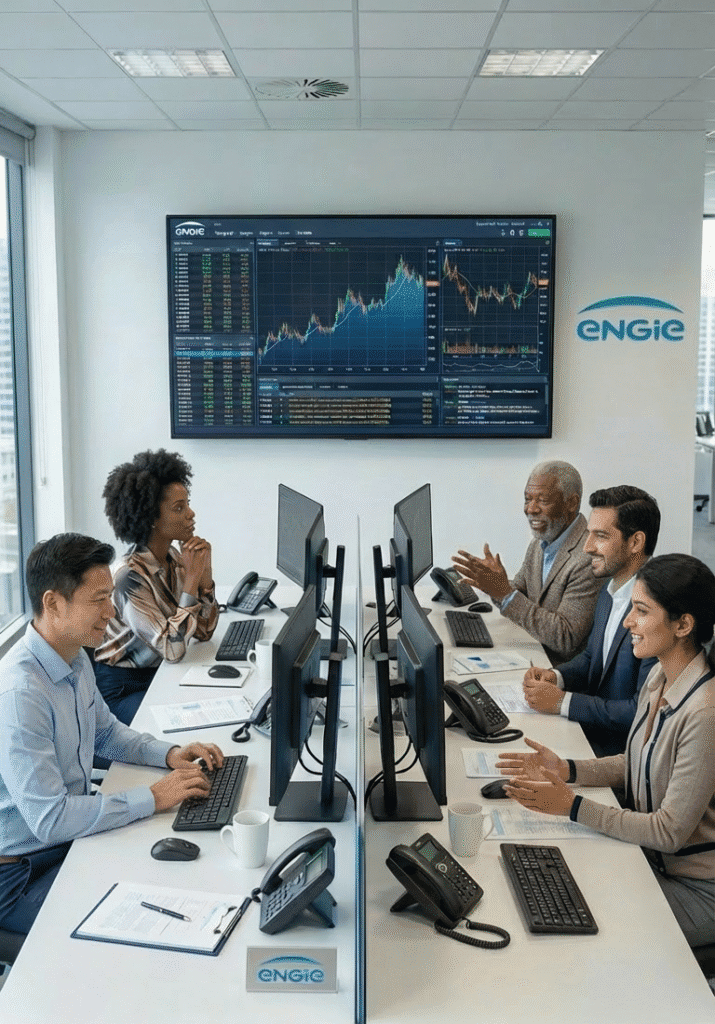
Across these roles, energy market knowledge remains essential, complemented by digital and data-driven approaches.
Core skills across roles
While job titles differ, a common set of skills is becoming increasingly important.
A working understanding of AI concepts is expected across many functions, including model performance, limitations, bias, drift and audit requirements. Generative AI tools are used as professional tools, within defined frameworks, with clear expectations around prompt structuring, source verification and the documentation of AI-assisted decisions.
These capabilities are built on strong technical foundations such as SQL, Python, APIs, data management, CI/CD and cyber security, combined with core market knowledge in probability, optimization, time-series analysis and risk modelling.
Equally important are behavioral skills: the ability to make decisions under uncertainty, communicate complex topics clearly, and work across disciplines including trading, risk, IT, data and finance. Continuous learning is an integral part of these roles.
To support this transition, ENGIE International Supply & Energy Management has launched AIventurers, a structured upskilling program involving more than 200 participants from across the organization. The initiative brings together a wide range of geographies, functions, roles, levels of seniority and areas of expertise, reflecting the diversity of ENGIE’s teams. What participants share is a common curiosity and a strong willingness to learn, developed through workshops and collaborative projects.
Energy careers are becoming increasingly cross-disciplinary. At ENGIE, teams across trading, risk, sales, data, finance and digital platforms work with shared tools and common standards. These roles contribute directly to the development of more resilient and lower-carbon energy markets.
ENGIE is actively recruiting across these areas.
Candidates interested in working at the intersection of energy, technology and international markets are invited to explore current opportunities.