The Hidden Toll: Integrating Carbon Costs into Corporate Investment Decisions
-
by Loïc METIVIER - Article
- Publié le 09/03/2026


What is Internal Carbon Pricing (ICP)?
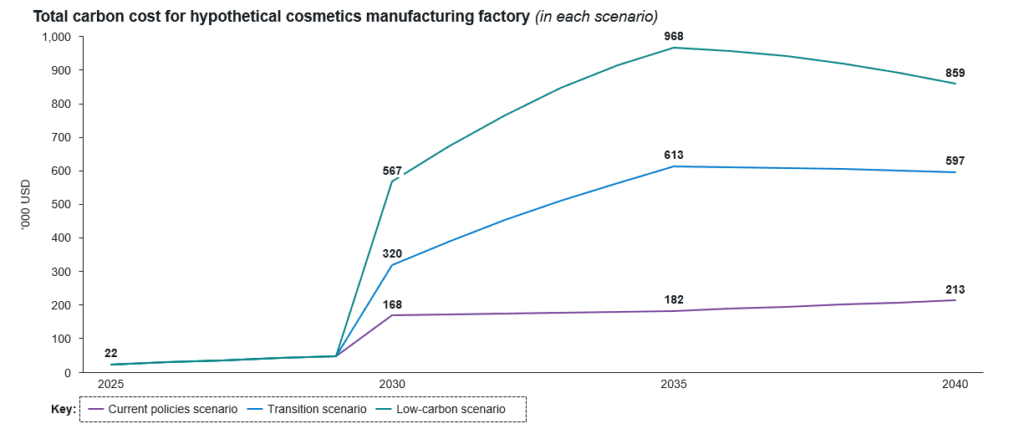
The picture is very clear. Corporate finance functions need an ICP process or tool that efficiently integrates the cost of carbon into the investment decision-making process and provides valuable insight into the overall evaluation. Neglecting carbon costs and their risks can lead to unrealistic expectations and turn investments into liabilities, while companies that adopt ICP benefit from its ability to enable more cost-effective decision-making about decarbonization, as well as allowing for the pricing of transition risks and opportunities into strategic considerations.
Practical Steps for Implementing ICP
There are two main types of ICP that companies can implement: payment schemes and, more commonly, shadow pricing. Each is a key enabler of business decarbonization strategies and action plans, helping to align stakeholders on the idea of considering carbon in the cost-benefit analyses of all types of activities.
They are also helpful in avoiding capital investment decisions that could result in future stranded assets, where the failure to anticipate the cost of carbon and market preferences can lead to financial nonviability or non-compliance. Essentially, ICP can be viewed as a tool to bridge strategy and investment. Additionally, banks, rating agencies, and IFRS S2 Climate-related Disclosures are asking companies to share how they are pricing carbon internally and factoring it into decision-making.
Here is a four-step approach that businesses can use to incorporate carbon costs into the financial investment decision-making process:
Step 1: Baselining emissions – Establish an emissions baseline from which to gauge the investment’s exposure to carbon costs (via its emissions profile) in the first year of operations. This can be challenging during accelerated investment timeframes and may require a suitable proxy approach when actual emissions data is unavailable.
Step 2: Project emissions – Forecast the baseline emissions through the end of the investment’s lifetime to estimate its total carbon output and costs. This includes assigning value to carbon streams. Simple and reasonable proxies, such as operational data and targets, may be used for forecasting due to the complexities of accurately projecting emissions in the future.
Step 3: Calculate carbon costs – With a clear projection of the investment’s emissions across all relevant emission scopes in hand, it is possible to calculate the associated carbon costs over its lifetime, including the two types of costs discussed above: decarbonization costs and transition costs.
Step 4: Incorporate carbon costs into financial valuation – Insert the carbon costs as a new line item in the investment’s financial valuation or annual cash flow assessment. The investment team can then continue with their valuation (e.g., NPV or IRR derivation) and proceed with decision-making.
Taking this approach, the future price of carbon can be integrated into the company’s current accounting, providing confidence that it is prepared for long-term decarbonization.
Complexity Is No Excuse for Inaction
Developing a suitable ICP mechanism can be highly complex. Nonetheless, ICP is crucial when it comes to gauging the viability of your investment strategy. Incomplete or limited data (e.g., for carbon price forecasts or emissions data) should not justify inaction, as an approximation of emission volumes can be made using operational data or revenue to identify a baseline of intensity factors in various sectors and give an indication of the associated carbon costs.
Similarly, the challenges of integrating future costs into existing business processes and obtaining stakeholder buy-in should be resolved efficiently to obtain the business’ carbon costs, as it is vital to conduct an assessment during the financial analysis.
Notwithstanding the multiple challenges of implementing an ICP mechanism, it is better to gauge the potential cost of carbon than to not conduct any cost assessment at all, as that would leave a company exposed to the risk of underestimating the hidden future costs. This lack of visibility could significantly erode profit margins and make projects financially unsustainable.
Companies cannot afford to delay the roll-out of an ICP mechanism. They should move swiftly to ensure that carbon costs are captured as soon as possible to gain visibility on their potential investments.